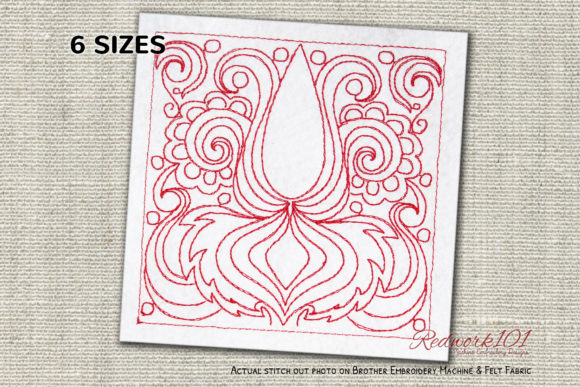
Indian Cultural Pattern Redwork
A Designer’s Real-World Review for Boutique Sweatshirt Projects
As an embroidery designer who’s developed over 200+ commercial-ready machine embroidery designs for small clothing brands and Etsy sellers, I approached Indian Cultural Pattern Redwork with both curiosity and scrutiny—especially knowing it was destined for a limited-edition sweatshirt drop. This isn’t just another digital embroidery file; it’s a cultural motif translated into stitchable form, and its success hinges on how thoughtfully it bridges tradition, texture, and wearability.
First Impression: Bold Yet Balanced
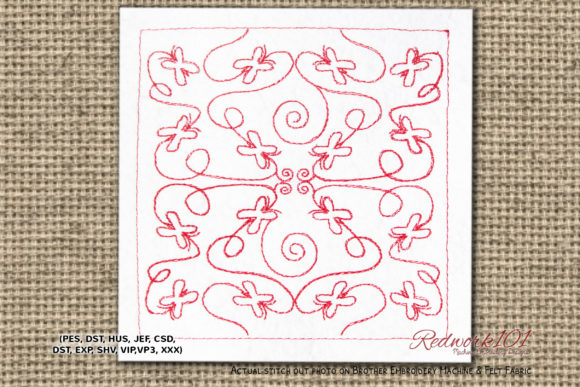
The moment I loaded the Indian Cultural Pattern Redwork file into my digitizing software, the mood came through instantly: grounded, intentional, quietly confident. It doesn’t shout—it invites closer looking. The layout feels rhythmic but not rigid, with organic spacing between motifs that suggests hand-drawn origins, even in its machine-stitched execution. This is where Indian Cultural Pattern Redwork stands apart from generic paisley or mandala files: it carries narrative weight without sacrificing embroidery practicality.
Stitch density is moderate—not overly dense like fill-heavy florals, nor sparse like minimalist outlines. That balance makes it ideal for sweatshirt embroidery, especially on midweight French terry or fleece-backed cotton blends. On dark fabric, the redwork palette (traditionally rich brick reds, deep rusts, or burnt siennas) pops with warmth and dimension. On heather grey or oatmeal, it reads as earthy and elevated. Even on soft pastel sweatshirts—think lavender heather or sage green—the contrast remains legible and intentional, not washed out.
Placement & Versatility Across Boutique Apparel
For our boutique brand’s upcoming drop, we tested Indian Cultural Pattern Redwork in three key placements: left-chest (standard 3.5" width), sleeve cuff accent (scaled to 1.75"), and centered back panel (at 6.5"). All worked—without distortion or visual fatigue. Its asymmetry and directional flow make it dynamic in motion, especially on oversized hoodies where the pattern’s rhythm echoes the drape of the garment.
This design belongs in lifestyle product photography. Its texture catches light beautifully in natural lighting—no heavy filters needed. When layered into printable mockups for Etsy listings, it adds instant authenticity. Buyers scrolling past dozens of “boho” or “ethnic-inspired” hoodie designs pause here—not because it’s flashy, but because it feels *made*, not mass-produced. That perception directly lifts perceived value and reinforces handmade credibility for small shop product owners.
Technical Fit for Commercial Embroidery
Let’s talk real production concerns. As a working embroidery designer, I check five things before clearing any file for batch production: thread color contrast, stabilizer compatibility, hoop size flexibility, small-detail retention, and wash durability. Here’s how Indian Cultural Pattern Redwork performs:
- Thread color contrast: Works best with high-contrast thread pairings—deep maroon on charcoal, terracotta on cream, or even indigo-on-ivory for subtle variation. Avoid matching thread to base fabric; this design thrives on definition.
- Stabilizer choice: Medium-weight cutaway stabilizer is ideal for sweatshirts. The design’s line work holds crispness without puckering—even on loopier fleece textures—when paired with proper underlay and pull compensation.
- Hoop size & placement: Fits comfortably in standard 4"x4" hoops at chest scale. Larger versions (for back panels) may require 5"x7", but the layout avoids awkward corners or jagged edges—critical for consistent hooping across 50+ units.
- Small-size readability: At 2.25", fine details remain distinguishable—not pixelated or fused. That means it scales down gracefully for sleeve accents or kids’ sizes without losing identity.
- Washing durability: No floating satin stitches or fragile open fills. The redwork style relies on clean outline + gentle fill techniques common in traditional Indian embroidery—meaning fewer thread breaks and better long-term wear.
Note: The product description mentions “The Box Stitch shown in picture is optional. The color of outer Box is different color in most of the designs unless it is part of the design itself, you can skip the color dir.” This is a helpful cue—not a limitation. It means you’re in control: omit the border entirely for a softer, integrated look, or use a contrasting thread for framing emphasis. That flexibility is gold for custom apparel branding where consistency meets personalization.
Brand Identity & Customer Connection
What makes Indian Cultural Pattern Redwork more than decoration? It builds recognition. When repeated across a seasonal collection—on sweatshirts, tote bags, and even woven labels—it becomes a quiet signature. Customers begin to associate that rhythm, that warmth, with your boutique brand’s voice: thoughtful, culturally rooted, and tactilely rich.
For Etsy sellers and digital embroidery file creators, this design checks multiple boxes: it’s distinctive enough to stand out in search results (“Indian embroidery design,” “redwork sweatshirt,” “cultural pattern machine embroidery”), yet versatile enough to support bundles (e.g., “Intricate Cuts: Cultural Motif Set”). Its inclusion in a product listing signals craftsmanship—not just print-on-demand convenience.
And let’s be clear: this isn’t “trendy.” It’s timeless-leaning. In a market flooded with AI-generated patterns, Indian Cultural Pattern Redwork feels human-scaled and hand-respected—a detail that resonates deeply with conscious buyers who value intention behind every stitch.
Final Thoughts for Small Creative Businesses
If you’re a craft-based apparel decorator, a micro-boutique owner, or an Etsy seller building a cohesive line, Indian Cultural Pattern Redwork delivers more than aesthetic appeal—it delivers confidence. Confidence that your sweatshirt embroidery will photograph well, stitch cleanly, wear well, and speak clearly about your brand’s values.
It fits naturally within the Intricate Cuts category—not because it’s fussy, but because every curve, every junction, every implied shadow has been considered for physical translation. As an embroidery asset, it earns its place in your design library alongside your most trusted motifs.
Before launching: double-check your specific file’s stitch count, recommended hoop size, and included color sequence—details that impact production speed and thread management. But know this—Indian Cultural Pattern Redwork is built for real-world use, not just preview screens. It’s ready for your next small-batch drop, your first curated capsule, or your most intentional customer connection yet.