Little Devil: A Craft Fair-Ready Halloween Embroidery Design
First Impression: Playful, Punchy, and Perfectly On-Brand
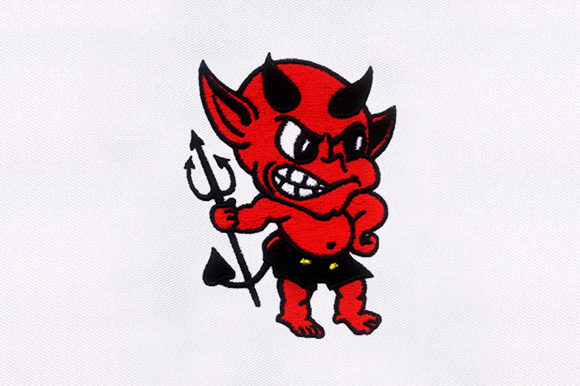
“Little Devil” lands with instant personality—mischievous but charming, bold but not intimidating. It’s not spooky-scare; it’s wink-and-grin Halloween. Think vintage cartoon meets modern handmade: cheeky, confident, and effortlessly wearable. For craft fair sellers, that tone is gold. It avoids seasonal cliché while still reading clearly as Halloween—ideal for customers who love festive flair without full-on horror themes. As a machine embroidery design, its title alone primes buyers for lighthearted charm, making it an easy sell on tote bags, aprons, or tea towel embroidery where warmth and wit matter.
Where Little Devil Shines in Real Booth Displays
In my booth setup—lined with embroidered market bags, linen aprons, cotton tea towels, and patch-adorned pouches—Little Devil consistently draws double-takes. It works strongest at 3–4 inches wide, where facial expression and stylized horns read cleanly from three feet away. On a natural canvas tote bag, it adds playful contrast without overwhelming the fabric. On a black denim apron? Instant focal point. As an embroidered patch, it holds up beautifully when sewn onto denim jackets or canvas backpacks—small enough to be affordable, large enough to feel intentional.
For handmade product variety, Little Devil scales smartly: as a small accent (1.5”) on pillow covers or fabric pouches, it adds whimsy without clutter; as a 5” centerpiece on a flour-sack tea towel, it becomes a conversation starter. It also photographs exceptionally well for Etsy listings—clean lines, strong silhouette, and high visual contrast make printable mockups pop, especially against neutral or earth-tone backgrounds.
Production Reality Check: What Works—and What Needs Care
This isn’t a “set-and-forget” embroidery file. While the design files cover every major format (PES, DST, HUS, VP3, JEF, and more), stitch density matters. I’ve seen versions of similar designs suffer from over-stitching in horn tips or tiny eyes—areas where thread buildup can cause puckering on lightweight cotton or visible distortion on textured kitchen towels. If your Little Devil embroidery file includes fine facial details or tight lettering (e.g., “oh dear!” or “devilish”), test it first on scrap fabric matching your final product’s weight and texture.
Curved surfaces like baseball caps demand extra attention: check whether the design fits comfortably within standard hoop sizes and whether dense areas compress awkwardly near the bill seam. On dark fabric, confirm thread colors provide enough contrast—especially for subtle shading or eyelash details. And if you’re stitching on terry cloth or heavy linen tea towels, use cutaway stabilizer underneath and consider reducing top tension slightly to prevent thread breakage.
Selling Smarter: Booth Impact & Customer Engagement
Little Devil strengthens booth display strength by offering immediate emotional resonance. At craft fairs, people don’t pause for technical perfection—they pause for *feeling*. This design delivers humor, nostalgia, and just enough edge to stand out among pumpkin motifs and ghost patterns. When paired with cohesive branding (think matching stitch-color palettes across tote bags and patches), it reinforces handmade quality and brand consistency—even for small shop owners juggling multiple product lines.
Buyer engagement rises when the design feels intentional, not generic. Customers ask, *“Is that hand-drawn?”* or *“Do you have it on a mug too?”* That curiosity opens doors for cross-selling. I’ve found Little Devil performs especially well as a limited-edition craft fair product—say, only on organic cotton pouches or locally milled tea towels—creating perceived scarcity and encouraging impulse buys.
Why It’s a Smart Choice for Digital Sellers & Etsy Entrepreneurs
As a digital embroidery file, Little Devil supports scalability without inventory risk. You can list it alongside finished product photos, offer layered color variations, or bundle it with coordinating Halloween designs—all while keeping your overhead low. For Etsy sellers, pairing the embroidery file with printable mockups (showing it on aprons, caps, and pillow covers) increases conversion. Just remember: commercial embroidery rights aren’t automatic. Before selling finished products, verify your license permits resale of physical items—not just the digital embroidery file itself.
Designer-to-Designer Notes: Your Pre-Stitch Checklist
- Test on scrap fabric—match fiber content, weight, and finish to your final product.
- Check thread contrast on both light and dark fabrics before bulk production.
- Review spacing and alignment: Does the design sit evenly on curved edges or asymmetrical items like pouches?
- Confirm hoop size compatibility—especially if stitching on caps or narrow tea towel borders.
- Inspect stitch density in high-detail zones (eyes, horns, mouths) to avoid thread nesting or fabric distortion.
- Use appropriate stabilizer: cutaway for stretchy or unstable fabrics; tear-away for crisp cottons.
- Create at least one real mockup—not just digital previews—to assess how light, texture, and scale interact in person.
- Compare fabric colors side-by-side: what reads warm on screen may look muddy on oatmeal linen.
- Verify licensing terms before marketing finished goods—commercial embroidery permissions vary by seller.
Bottom line? Little Devil is more than a Halloween embroidery design—it’s a versatile, emotionally intelligent asset for creative entrepreneurs. It balances fun with finesse, simplicity with character, and digital flexibility with tangible handmade appeal. When executed with care, it transforms everyday items into memorable craft fair products—and turns casual browsers into loyal repeat buyers.