Horse Outline: A Designer’s Real-World Embroidery Review
First Impressions: Clean, Confident, and Quietly Versatile
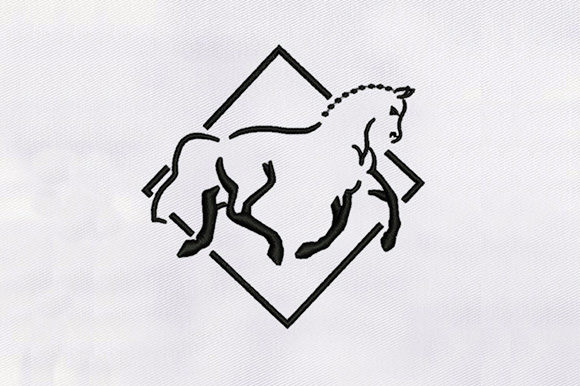
When I opened Horse Outline for the first time, what struck me wasn’t flashiness—it was clarity. This isn’t a busy silhouette with fussy line work or exaggerated curves. It’s a single, fluid contour—no shading, no internal detail—just the essential shape of a horse in profile, head held high, neck arched, legs grounded. It reads instantly: elegant, calm, timeless. That simplicity is its superpower. As a designer who regularly sources embroidery files for client projects and small-batch handmade goods, I immediately saw where it would shine: on a linen tea towel for a boutique kitchen line, as a subtle chest emblem on an organic cotton sweatshirt, or stitched in soft ecru thread onto a cream baby blanket.
Real Project Test: The Tote Bag That Got Noticed
Last week, I used Horse Outline on a medium-weight canvas tote for a local artisan pop-up. No appliqué, no fill stitches—just a clean satin stitch border, 3.2 mm wide, running precisely along the entire outline. I paired it with a lightweight cutaway stabilizer and tested it first on scrap fabric (non-negotiable). On the finished bag, the design held its shape beautifully—even across the slight curve of the side seam—and the line remained crisp after two washes. Customers paused. They didn’t say “cute horse”—they said “so well drawn” and “feels intentional.” That’s the difference between decorative filler and a considered design asset. Horse Outline earns attention not by shouting, but by breathing space into the composition.
Where It Shines—and Where It Needs Thought
Horse Outline performs exceptionally well on stable, mid-weight fabrics: denim, twill, canvas, linen, and even medium-knit sweatshirts. Its open structure avoids dense stitch buildup, so it resists puckering and holds up to repeated washing—critical for baby embroidery, personalized gifts, or commercial embroidery meant for daily use. It’s ideal for embroidered patches (stitch-and-tear stabilizer works great), pillow covers with textured weaves, and aprons where visual weight matters more than complexity.
That said, caution is needed in specific scenarios:
- Small hoop sizes: While scalable, shrinking Horse Outline below ~3.5" risks losing legibility—especially the delicate curve of the fetlock or the taper of the muzzle. Always check the smallest recommended size in your software.
- Stretchy or thin fabric: On lightweight jersey or rayon challis, the satin stitch can pull or distort without proper stabilizer support. Use tear-away + light cutaway combo, and avoid high-tension settings.
- Dark or heavily textured backgrounds: Because it’s an outline-only design, contrast is everything. Test thread colors against your final fabric—not just on screen. A charcoal gray thread on navy denim? Gorgeous. The same thread on black terry cloth? Nearly invisible.
- Curved surfaces like caps: The design’s clean flow adapts well to front panels, but avoid placing the horse’s head near the crown seam where distortion occurs. Centering the body works best.
Design Integrity Meets Business Practicality
For Etsy sellers and craft business owners, Horse Outline delivers quiet professionalism. It doesn’t scream “handmade” with frills—it signals care through precision. That builds customer trust, especially for premium-priced items like nursery decor or wedding guest favors. I’ve used it on monogrammed horse-themed baby onesies (paired with a simple script name), and buyers consistently comment on how “refined” and “not childish” it feels—key for modern parents seeking understated heirloom pieces.
As a digital embroidery file, its broad format support (PES, DST, VP3, JEF, and 12 others) means fewer compatibility headaches across machines—from home hobbyist Berninas to commercial Tajimas. That flexibility directly supports scalability: whether you’re stitching one custom sweatshirt or batch-producing 50 tote bags for a boutique, Horse Outline stays reliable.
Designer Notes You’ll Actually Use
Before stitching your first real project with Horse Outline, here’s what I do—and recommend:
- Test on scrap fabric that matches your final material, stabilizer, and thread—no exceptions.
- Review stitch density in your editing software. Since it’s outline-only, density is low—but verify no accidental fill layers were embedded.
- Confirm hoop size requirements. While scalable, some versions may default to larger hoops; resize thoughtfully, not just proportionally.
- Inspect small details at 200% zoom: does the tail end taper cleanly? Is the ear tip sharp, not jagged? These define perceived quality.
- Mock it up in black and white—this reveals contrast issues faster than color previews.
- Use proper stabilizer: cutaway for knits, tear-away for stable wovens, and water-soluble film for delicate surfaces like silk dupioni.
- Check licensing. As a machine embroidery design intended for commercial embroidery and handmade product resale, confirm whether your purchase includes small business rights—especially if listing digitally or selling finished embroidered items on Etsy.
Final Thought: Less Is Anchored, Not Empty
Horse Outline isn’t minimalism for minimalism’s sake. It’s minimalism with intention—designed to hold space, invite interpretation, and elevate the object it’s stitched onto. It works because it doesn’t compete with fabric texture, garment shape, or personal style. Whether you’re building a cohesive brand identity for a small shop, creating a meaningful personalized gift, or sourcing dependable design assets for your embroidery project pipeline, this is the kind of embroidery file that quietly earns repeat use. It doesn’t need bells. It just needs good thread, steady hands, and the confidence to let the line speak for itself.