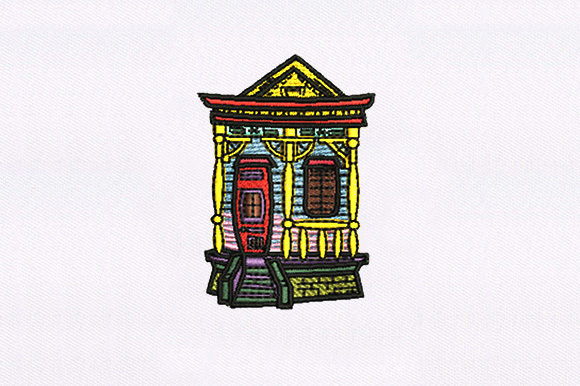
Dream House: A Seasonal Embroidery Design Review
First Impressions: Warm, Nostalgic, and Gift-Ready
Opening the Dream House machine embroidery design, I immediately felt its seasonal pulse — soft curves, balanced proportions, and a quiet elegance that leans into cozy nostalgia rather than loud festivity. It’s not overtly holiday-themed (no snowflakes or reindeer), but its gentle architecture — sloped roof, centered door, subtle window details — evokes hearth, homecoming, and heartfelt gifting. This isn’t a cartoonish cottage or a minimalist line drawing; it’s a thoughtfully rendered house with warmth in its silhouette and intention in its stitch placement. For Etsy sellers and small shop owners building limited-edition collections, Dream House lands as both timeless and timely — equally at home on a spring baby blanket and a Christmas ornament.
Where Dream House Shines in Real Holiday Selling
This embroidery file excels where emotional resonance meets practical versatility. On sweatshirt embroidery, it anchors family matching sets beautifully — especially when paired with coordinating initials or birth years. As tote bag design, it becomes an instant conversation starter at craft fairs: “That’s *my* dream house!” customers say, smiling. For kitchen towel embroidery, it adds quiet charm without overwhelming texture — no competing with flour-dusted counters or simmering pots. On pillow covers and table linens, it elevates everyday moments into curated experiences, supporting gift bundles like “Cozy Home Kit” (towel + pillow + embroidered apron).
Dream House also performs exceptionally well in digital-first selling. Its clean lines translate flawlessly into printable mockups for social media previews — no pixelation, no lost detail. As a personalized gift, it pairs seamlessly with monogrammed initials or a short phrase (“Est. 2024”, “Home Is Where We Are”) without visual clutter. And because it avoids excessive density or tiny elements, it renders consistently across platforms — whether viewed on a phone screen or pinned to a craft fair bulletin board.
Careful Use Cases: Know Before You Stitch
While Dream House is broadly adaptable, some applications demand extra attention. On tiny hoop sizes (under 4x4 inches), test the smallest version first — delicate window panes or door detailing may blur if scaled too far down. Avoid using it on thick towels without dense stabilizer: high stitch density near rooflines can pucker unless backed properly. For dark fabric, skip light thread colors unless you’re layering underlay — contrast matters for emotional impact, and washed-out tones weaken giftability. Metallic thread? Possible, but only on roof accents — avoid fine lines or textural elements where slippage risks distortion.
Steer clear of stretchy garments like ribbed knits unless you use cutaway + tear-away combo stabilizer and reduce top tension slightly. And while Dream House works on curved surfaces like caps, avoid placing it directly over seams or high-movement zones — the design’s balance relies on even fabric tension. Finally, for items requiring repeated washing (baby onesies, kitchen linens), confirm the stitch density supports durability — if unsure, run a wash-test sample before bulk production.
Seasonal Appeal & Buyer Emotion: Beyond the Stitch
Holiday shoppers don’t just buy designs — they buy feelings. Dream House taps into deep-rooted associations: safety, belonging, legacy, and quiet joy. That makes it powerful for handmade gift positioning. When listed on Etsy with warm lifestyle photos — a steaming mug beside a Dream House-embroidered pillow, or a child holding a patch-adorned backpack — it signals care, intention, and story. Customers trust shops that curate meaning, not just motifs. This design helps build brand consistency across product types: same core motif, different contexts (a linen pouch, a ceramic ornament wrap, a denim jacket back panel). And because it reads clearly at multiple sizes, it boosts visual recognition — shoppers scrolling Instagram or browsing a holiday market instantly connect your shop with comfort and craftsmanship.
Practical Designer Notes for Seasonal Success
Before adding Dream House to your holiday lineup, take these steps:
- Test thread colors on both light and dark fabric — especially for door and window accents where contrast defines clarity.
- Confirm hoop size compatibility across your most-used machines. This digital embroidery file includes formats for nearly every major brand (PES, DST, VP3, HUS, JEF, etc.), but always verify your machine’s native format and max hoop dimensions.
- Use proper stabilizer — medium-weight cutaway for apparel, tear-away + light iron-on for towels and linens.
- Create realistic mockups before listing. Show how Dream House looks on actual sweatshirt fabric grain, not just flat white backgrounds.
- Review small details after stitching: check window symmetry, roof edge crispness, and door alignment — minor shifts affect perceived quality.
- Plan matching color palettes in advance: sage + cream, navy + gold, or charcoal + oatmeal all support Dream House’s mood without competing.
- Confirm commercial licensing before selling finished seasonal products. Since this is a machine embroidery design, verify usage rights apply to your business model — especially for wholesale, subscription boxes, or bundled kits.
Final Thought: A Foundation, Not Just a Motif
Dream House isn’t just another holiday embroidery file — it’s a flexible foundation for meaningful seasonal storytelling. Whether you’re launching a “First Home” gift line for newlyweds, a “Little Nest” baby collection, or a “Holiday Hearth” home decor drop, this design carries weight without heaviness. It invites personalization, supports thoughtful presentation, and holds up under real-world wear and holiday hustle. For the Etsy seller, the small shop product creator, and the handmade gift maker alike, Dream House earns its place — not because it shouts, but because it settles in, warmly and memorably, right where it belongs.