Female Silhouette
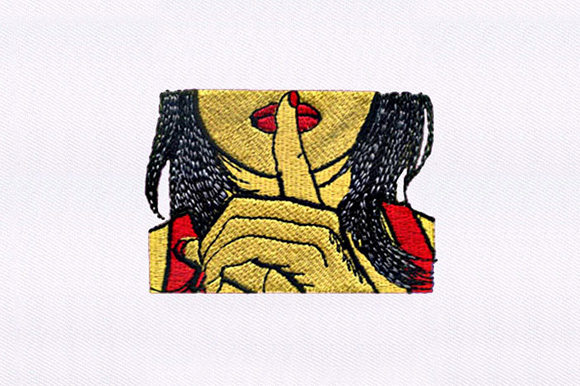
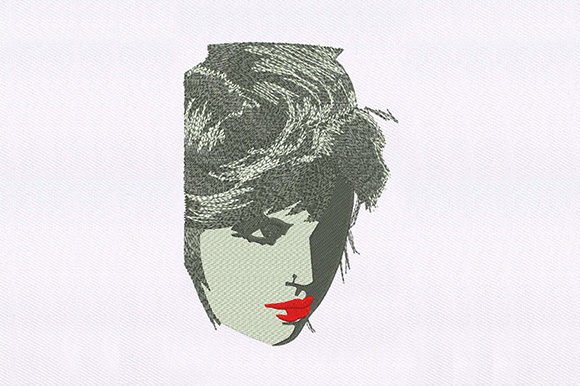
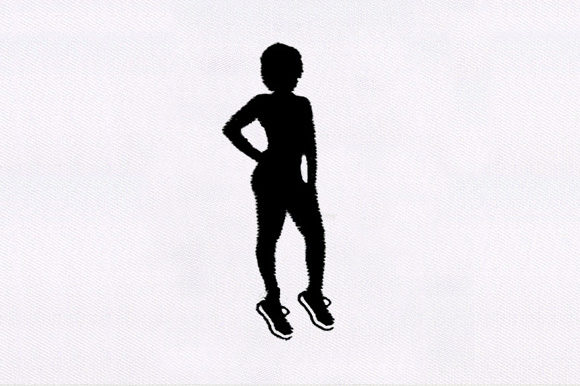
As a designer who’s stitched hundreds of machine embroidery designs for client work, Etsy shops, and boutique product lines, I opened Female Silhouette expecting elegance—and got something more: quiet confidence. It’s not fussy, not overly stylized, not trying too hard. Just a clean, balanced profile—head tilted slightly, shoulders relaxed, hair softly implied—not drawn, but *suggested* through stitch placement and contour. That subtlety is its strength. I immediately pictured it on a linen tea towel for a bridal shower gift, centered just above the hem, stitched in soft heather gray thread. No text needed. No embellishment required. Just presence.
Where This Design Lives Best
Female Silhouette thrives where intention matters more than ornamentation. Think minimalist apparel: a lightweight organic cotton sweatshirt, embroidered low on the left chest; a heavyweight canvas tote bag, stitched large and centered for quiet sophistication; or a baby onesie in ivory thread on oatmeal fabric—delicate, respectful, never cutesy. It’s also a standout as an embroidered patch—heat-applied or sewn-on—for aprons, denim jackets, or even nursery wall hangings. Because it’s a single-profile outline with gentle internal curves (not sharp angles or micro-details), it holds up beautifully at medium sizes (3–5 inches wide) across varied surfaces.
I recently tested it on a curved cap front using a 4×4 hoop. With light cutaway stabilizer and reduced top tension, the curves stayed smooth—no puckering, no distortion. That’s rare for a silhouette design without heavy fill or dense satin borders. It also translated cleanly to a kitchen towel mockup: the open negative space inside the shape let the fabric breathe, avoiding that “heavy ink blot” look some fill-stitch silhouettes create. For small business owners, that means faster stitch time, less thread consumption, and higher consistency across batches—critical when you’re fulfilling Etsy orders or prepping for a craft fair.
Fabrics & Finishes: What Works (and What Needs Caution)
This isn’t a design that forgives texture—or lack thereof. On terry cloth towels or heavily napped fleece? It’ll lose definition in the inner contours unless you add medium tear-away + topping. On thin rayon or silk-blend charmeuse? Use ultra-light stabilizer and reduce density manually in your editing software—otherwise, the outer satin stitch edge can pull and distort. But on stable midweight fabrics—cotton twill, brushed poly-cotton, linen-cotton blends—it sings. The stitch path flows evenly, with no abrupt jumps or nested jumps that cause thread breaks.
Dark fabric is where Female Silhouette earns its keep. Stitched in white or ecru, it reads with clarity and warmth—not stark, not clinical. On black or navy, it feels intentional and grounded. On light fabric? Go darker thread (charcoal, deep olive) for contrast without harshness. Avoid pastel-on-pastel combos unless you’re aiming for whisper-soft subtlety—and even then, test first. Running stitch outlines or fine fill gradients aren’t present here, so contrast does the heavy lifting.
Real Project Moment: The Personalized Tote Bag Launch
Last month, I used Female Silhouette as the anchor design for a limited-run set of handmade canvas tote bags sold through my small shop. Each bag featured the silhouette centered, plus a custom name in a clean sans-serif script below it—stitched separately, with 2mm spacing. Customers loved how the silhouette gave the piece identity without dominating. One buyer messaged: *“It feels like it was made just for me—not mass-produced, but quietly personal.”* That’s the power of restraint. Because Female Silhouette doesn’t shout, it invites closer looking. It supports personalization instead of competing with it.
Design Integrity & Commercial Practicality
Let’s talk trust. When you sell a finished product—or list a digital embroidery file on Etsy—you’re selling reliability. Female Silhouette delivers that. The file formats cover every major machine brand (PES, DST, VP3, HUS, JEF, etc.), meaning fewer support questions from buyers. There are no tiny interior details that vanish at 2.5 inches, no fragile stem stitches prone to fraying after three washes, and no overlapping satin columns that trap lint or snag during trimming. As a design asset, it scales cleanly—whether you’re stitching it solo or layering it into a larger composition (e.g., flanked by botanical motifs for a spa-themed apron line).
That said: always test. Run it on scrap fabric matching your final project’s weight and stretch. Check how the outer edge behaves on knit vs. woven. Verify thread color contrast in natural light—not just your screen. And if you’re selling physical items, confirm your license permits commercial use. The listing says “Embroidery” and falls under “Beauty”—so it’s clearly intended for aesthetic, expressive use, not logos or trademarks. Keep that distinction clear in your shop policies.
Final Notes for Embroidery Designers & Sellers
- Test before committing: Stitch on scrap fabric first—especially if using textured, dark, or stretchy materials.
- Stabilizer matters: Light cutaway for knits, medium tear-away for wovens, topping for napped fabrics.
- Thread contrast is non-negotiable: View mockups in grayscale and on both light/dark backgrounds.
- Hoop size check: Review the actual dimensions in your software—don’t assume it fits your standard hoop.
- Licensing clarity: Confirm whether your use case (personal, small-batch, digital resale) aligns with the included terms.
- Mockup realism: Use printable mockups with accurate fabric grain and drape—not flat white squares.
- Wash testing: If selling baby or apparel items, launder a test piece to assess stitch durability and fraying.
In a market flooded with overdesigned, overcomplicated embroidery files, Female Silhouette stands out by doing less—and doing it well. It’s not flashy. It won’t trend on TikTok. But it will earn repeat customers, elevate your handmade product photography, and hold up professionally across seasons, fabrics, and uses. Whether you’re stitching a single personalized gift or building a cohesive line of boutique merchandise, this design works because it respects the material, the machine, and the person wearing or holding the finished product.